Quick answer
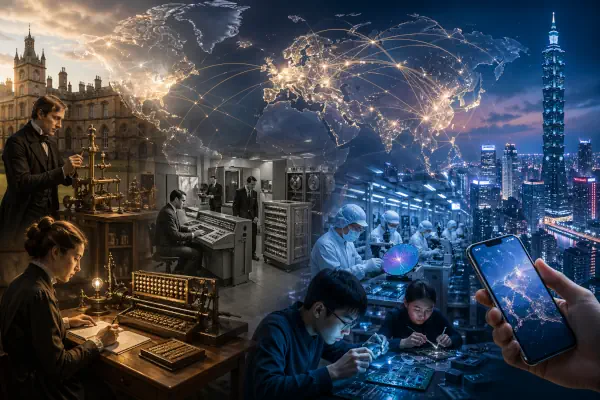
The most innovative digital civilizations are the ones that, in their own time, managed to break through a decisive barrier: computing better, miniaturizing better, standardizing better, connecting better, or producing at scale more effectively. The United Kingdom laid the conceptual groundwork, the United States industrialized computing and the internet, Japan made electronics more compact and reliable, South Korea and Taiwan accelerated chip power and device manufacturing, while Europe became indispensable through critical production technologies.
The result is enormous: a smartphone now combines what once required several separate devices, several trips, several networks, and sometimes several days of work.
In brief
The history of digital technology is the story of a global civilization built in waves. A first wave invents the principles. A second builds the industry. A third miniaturizes. A fourth connects the planet. A fifth makes AI, cloud computing, smart devices, and large-scale mobile networks possible.
In this article
- Core question and guiding idea
- Big chronological overview
- The United Kingdom and foundational ideas
- The United States and digital industrialization
- Japan and consumer miniaturization
- South Korea, Taiwan, and Europe in critical chips
- Real-world impact on households
- What progress these inventions unlocked
- Sources and key references
- Full FAQ
Main question: which civilizations most deeply shaped digital technology?
To answer seriously, we have to avoid the reflex of making a simplistic ranking. Digital technology cannot be explained by one “genius country,” but by a succession of technological civilizations that each solved a central problem of their era in their own way.
The United Kingdom contributed part of the foundational concepts. The United States drove the mass industrialization of computing, the transistor, the integrated circuit, large compatible systems, and the internet. Japan brought electronic miniaturization and industrial reliability into everyday life. South Korea strengthened memory, displays, and consumer electronics. Taiwan perfected the advanced foundry model, which became vital for modern chips. Europe, through strategic players such as ASML, enabled part of the machinery without which the most advanced process nodes would be far harder to produce.
Together, these centers of innovation turned the calculating machine into a global infrastructure for homes, work, healthcare, commerce, transport, research, and communication.
A chronological reading: how digital technology conquered the world
Major stages
- 19th century: the birth of programmable computing ideas with Babbage and Ada Lovelace.
- Mid-20th century: the shift to electronics with the transistor and the first large-scale systems.
- 1960-1980: computing industrialization, microprocessors, standardization, and the spread of semiconductors.
- 1969-2000: networks, the internet, the web, and the global software economy.
- 1980-2010: miniaturization, consumer electronics, PCs, consoles, mobile devices, memory, and displays.
- 2010-2026: the global smartphone, cloud, app economy, AI, advanced chips, and leading-edge lithography.
The logic is simple: first humanity wanted to make calculation reliable, then faster, then shrink the machines, then connect them, and finally put that power in a pocket.
Dominant digital civilizations are not just the ones that invent a new object; they are the ones that make the invention reproducible, affordable, standardized, exportable, and indispensable.
The United Kingdom: when digital technology began as an idea before becoming an industry
One of the earliest great digital civilizations did not dominate through factories, but through the power of its concepts. In the 19th century, Charles Babbage imagined calculating machines designed to reduce human error. The Computer History Museum notes that his ambition was precisely to eliminate calculation, copying, and composition mistakes through mechanical automation.
Beside him, Ada Lovelace brought something even more visionary: the intuition that a machine could process more than numbers if instructions were formally structured in the right way. That step may sound abstract, but it was enormous. It opened the door to the very idea of a program.
The challenge of that era
At the time, the problem was not the smartphone or the cloud. It was the reliability of calculation in a society becoming more scientific, more maritime, more financial, and more industrial. Correcting tables, preventing navigation errors, improving engineering calculations: that was already digital thinking before the digital age.
What this stage gave humanity
It introduced a foundational idea: calculation could be outsourced to a machine, organized into procedures, and eventually automated at scale. Without that intellectual shift, the history of computing would likely have moved much more slowly.

The United States: the civilization that turned the idea into a global system
If one had to identify the main center of digital industrialization in the 20th century, the United States would almost naturally stand out. It is where several decisive breakthroughs followed one another: the transistor, the integrated circuit, compatible large systems, microprocessors, advanced networking, the internet, and then the software and platform economy.
The Nobel Prize reminds us that the 1956 Physics Prize recognized research on semiconductors and the discovery of the transistor effect. This transition was crucial: without the transistor, there would be no credible miniaturization, no compact computers, no modern smartphones, and no large-scale embedded computing.
A few years later, IBM triggered another major shift. With the System/360, launched in 1964, the company promoted a compatible architecture across an entire family of machines. IBM explains that this system replaced several product lines with one coherent family and helped establish the 8-bit byte. In plain terms, innovation no longer came only from a component, but from an industrial standard.
Why this stage changed everything
A technology becomes truly dominant when it stops being an exceptional breakthrough and becomes a common foundation. The professional world does not just buy a machine; it buys a future that is maintainable, documented, compatible, and scalable. The United States excelled at turning technical genius into reproducible infrastructure.
DARPA also recalls that ARPANET, demonstrated from 1969 onward, paved the way for the internet. Then Intel popularized a logic of continuous progress embodied by Moore’s famous law: more transistors, more power, often at controlled cost on an industrial scale. That promise served as a compass for the sector for decades.
What the United States managed to solve
- the leap from theory to industry
- architecture standardization
- mass electronic miniaturization
- machine-to-machine connectivity
- the creation of global software and economic ecosystems
This movement had a massive impact on real life. Computing left closed centers and gradually entered companies, schools, households, and eventually the pockets of billions of people. Apple, for example, reports that in 2024 the global App Store ecosystem facilitated $1.3 trillion in billings and sales, and that the App Store had more than 850 million average weekly users. That figure does not tell the whole digital story, but it does measure the scale of a software economy that has become part of daily life.
In other words, American genius was not just about inventing components; it was above all about turning invention into a global market.
Japan: the civilization of reliable miniaturization
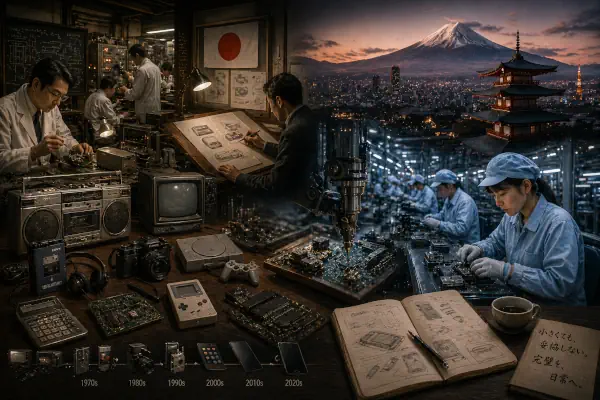
Any serious history of digital technology would be incomplete without Japan. Its long-standing strength was turning electronic sophistication into devices that were more compact, more reliable, better finished, and more appealing to consumers. While other centers often dominated the laboratory, Japan frequently excelled in industrial discipline, assembly quality, ergonomics, and product integration.
This technological civilization played a major role in moving electronics out of a purely institutional setting and into the heart of the home: calculators, audio gear, video devices, microcomputers, consoles, cameras, screens, components, sensors, and embedded electronics.
The challenge of its era
The challenge was no longer simply to make a machine work. Technology now had to become smaller, more durable, more reproducible, and more acceptable in ordinary life. Digital technology had to leave the technical room and enter the living room, the office, the pocket, or the bag.
This is where the essential difference between invention and real innovation becomes visible: the inventor opens a door, but the one who truly changes household life is often the one who reduces size, failure, cost, heat, noise, weight, or complexity of use.
South Korea, Taiwan, and Europe: the powers that became indispensable in the age of advanced chips
As digital technology advanced, a new center of gravity emerged: leading-edge semiconductors. In this part of the story, three regions matter enormously: South Korea, Taiwan, and strategic areas of Europe.
South Korea established itself as a major force in memory, displays, mobile electronics, and large-scale consumer industrialization. Samsung reported that in the fourth quarter of 2025, its memory business reached a record-high quarterly revenue amid strong demand in segments such as advanced DRAM and high-value memory.
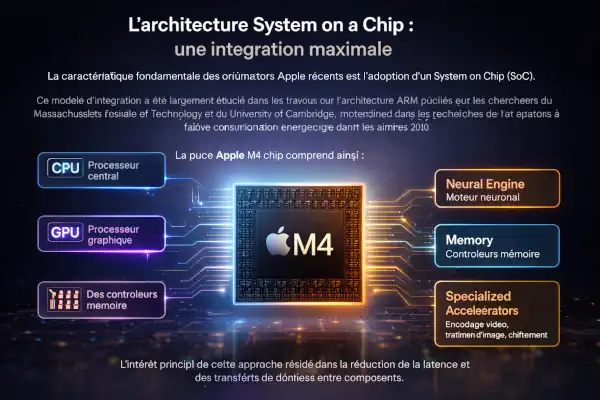
Taiwan, for its part, embodied another revolution: the pure-play foundry model. TSMC is not just a high-performing industrial company; it represents a new way of organizing the global supply chain. According to its 2025 documents, advanced technologies at 7 nm and below accounted for 74% of its wafer revenue, with 24% from 3 nm alone. That reveals something profound: modern digital technology now relies on an intense concentration of manufacturing know-how at extremely demanding levels.
Finally, Europe remains decisive through lithography. ASML reported in its 2025 results €32.7 billion in annual net sales, with 48 EUV systems sold during the year. Behind those figures lies a simple reality: it is not enough to imagine a chip; you also need the machines capable of etching it with extraordinary precision.
Why this phase matters so much
Beyond a certain point, digital dominance no longer depends only on software or polished interfaces. It depends on deep hardware mastery: lithography, yield, memory, manufacturing chains, industrial tooling, quality, power efficiency, packaging, and volume scaling.
That is why the map of the digital world cannot be reduced to Silicon Valley. It now includes a much finer industrial geography in which several civilizations cooperate, compete, and sometimes become mutually indispensable.
When innovation truly goes global: the internet, mobile, and the digital economy
The next stage was not simply about producing more powerful machines. It was about bringing digital technology into the lives of nearly everyone. The ITU notes that, after revision, the 2024 estimate reached 5.8 billion internet users, or 71% of the global population. That gives a sense of the historical shift: the network is no longer a tool for experts, but a planetary space of daily life.
Mobile technology amplified that shift even further. World Bank DataBank, drawing on ITU data, shows that global mobile cellular subscriptions have long exceeded a strict “one person, one line” ratio, a sign that connectivity has become a widespread infrastructure layer. The GSMA also estimates that mobile technologies and services account for around 5.8% of global GDP, or $6.5 trillion in value added.
Digital technology is no longer just a sector. It has become an activity multiplier: payments, commerce, communication, logistics, healthcare, remote work, video, mapping, education, social networks, entertainment, public services, and now artificial intelligence.
UNCTAD adds that between 2016 and 2022, business-to-business e-commerce sales rose by nearly 60% in 43 countries representing roughly three quarters of global GDP, reaching $27 trillion. That shows clearly that digital technology did not merely improve household comfort; it also reshaped large-scale economic flows.
How these inventions changed everyday life for households
This is where the story becomes tangible. For a long time, major digital innovations seemed technical and somewhat distant. Yet their real impact is visible in simple everyday actions.
What digital technology has genuinely simplified in daily life
- communicating instantly with a household, a business, or a public administration
- finding information in seconds instead of going through multiple intermediaries
- paying, buying, or booking without systematic physical travel
- studying, learning, and training remotely or independently
- moving around more efficiently thanks to maps and real-time services
- accessing entertainment without accumulating as many separate physical devices
- bringing multiple uses together into a single portable device
The U.S. Census Bureau illustrates this material shift clearly: in its report on 2021, published in 2024, 90% of households owned at least one smartphone, 81% had a desktop or laptop computer, and 90% had a broadband internet subscription. That is only one country, of course, but it offers a very concrete demonstration of how deeply digital technology is woven into the structure of the modern household.
The true miracle of digital technology is not just raw power. It is the compression of everyday time. A map, a camera, a game console, a bank, a radio, a video rental store, a directory, messaging, a newsstand, a GPS, and a calendar can now coexist inside a single object.
The early investors and the big bets that reshaped the market
Inventions alone are never enough. They require investors, governments, manufacturers, and sometimes visions that seem almost unreasonable. Digital technology moved forward because capital accepted the cost of funding enormous machines, expensive laboratories, unstable components in their early days, risky standards, and factories that kept growing more complex.
Large American systems would not have existed without massive investment. Modern semiconductors would not exist without huge industrial spending. Global networks would not exist without heavy public and private investment. Smartphones would never have broken through without the convergence of components, interfaces, operating systems, mobile networks, app stores, and global logistics.
That is the common trait of dominant digital civilizations: they did not just invent. They accepted the cost of scaling up.
What new progress have these inventions helped humanity achieve?
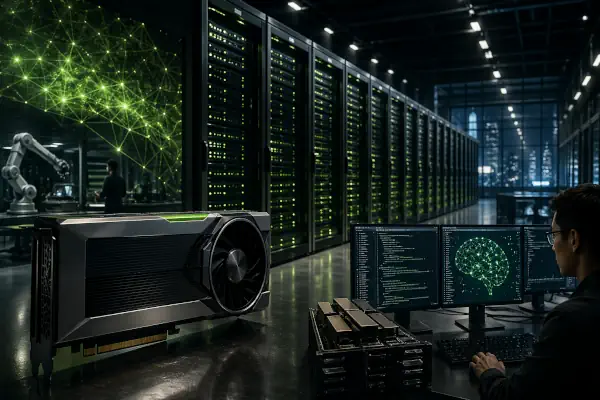
Digital inventions prepared far more than the everyday screen. They enabled the rise of cloud computing, real-time services, intensive scientific computing, industrial automation, connected healthcare, digital finance, educational platforms, and now the infrastructure required for modern artificial intelligence.
More powerful semiconductors make stronger computing models possible, but also less power-hungry, more mobile, and more reliable devices. Networks accelerate the spread of knowledge. Software logic allows services to be updated instead of forcing systematic hardware replacement. The smartphone prepared a humanity that is always connected, and advanced chips are preparing a humanity able to delegate more analysis, translation, prediction, simulation, and assistance to digital systems.
The new horizon
The next great challenge will likely be to reconcile power, sovereignty, efficiency, security, and fair access. Digital technology has already transformed household life; the question for the coming years is how to make it more robust, more accessible, more sustainable, and more useful without deepening dependency or inequality.
Conclusion: the history of digital technology is a story of passing the baton
If this article had to be reduced to a single idea, it would be this: no single civilization built modern digital technology on its own. Each won a specific battle. One formulated the ideas. Another built the industry. Another miniaturized. Another scaled up production. Another etched more finely. Another connected more broadly.
What makes this story so fascinating is precisely that continuity. Early calculators sought to reduce human error. Modern chips seek to multiply useful power. In between, digital technology stopped being a mere technical feat and became a deep layer of human civilization.
That is why the great digital civilizations are so compelling: they do not just tell the story of machines. They tell the story of how humanity learned, century after century, to delegate part of its calculation, memory, communication, and organization to increasingly intelligent systems.
To go further: three related reads on this topic
Sources and references for deeper reading
- Computer History Museum — on Charles Babbage, Ada Lovelace, and the ambition to eliminate human error through calculating machines.
- Nobel Prize — on the transistor and the semiconductor breakthrough.
- IBM History — on the System/360, software compatibility, and the importance of standardized architecture.
- DARPA — on ARPANET and the origins of the modern internet.
- Intel — on the historical logic of Moore’s Law and the ongoing progress of chips.
- ITU — on the global number of internet users and the worldwide spread of connectivity.
- World Bank / ITU data — on global mobile cellular subscriptions.
- UNCTAD — on the growth of the digital economy and e-commerce.
- U.S. Census Bureau — on household digital equipment.
- Apple — on the economic impact of the App Store ecosystem.
- TSMC — on the weight of advanced 3 nm, 5 nm, and 7 nm technologies in modern production.
- ASML — on advanced lithography and EUV system sales.
- Samsung Electronics — on advanced memory and recent dynamics in the component market.
- GSMA — on the global economic contribution of mobile technologies.
FAQ
Why talk about digital civilizations instead of just one country?
Because modern digital technology is the result of a historical chain. The United Kingdom nourished foundational concepts, the United States industrialized computing and networks, Japan accelerated consumer miniaturization, South Korea strengthened memory and electronics, Taiwan refined advanced foundry manufacturing, and Europe retains a critical role in production machinery.
Which invention changed the digital world the most?
It is difficult to choose only one. The transistor made modern electronics possible, the integrated circuit increased density and power, compatible architectures standardized usage, the internet connected the planet, and the smartphone condensed all these advances into a mass-market device.
What is the real impact of digital technology on households?
It can be measured in time saved, access to information, instant communication, payments, navigation, education, entertainment, and the merging of many everyday uses into one connected device. Many daily tasks can now be handled through a single connected object.
Why have semiconductors become so decisive?
Because they determine the power, energy consumption, miniaturization, and reliability of nearly every modern digital device, from smartphones to servers, including cars, medical equipment, and AI systems.
What new progress have these inventions moved us toward?
Toward cloud computing, AI, real-time services, connected medicine, educational platforms, advanced mobile networks, accessible creative tools, and a computing infrastructure that is becoming central to the economy, science, and human communication.