My short answer: searching for life is not about targeting just any “temperate” planet
When people talk about habitable exoplanets, the popular image is often simple: a planet at the right distance from its star, neither too hot nor too cold. That is a useful starting point, but it is nowhere near enough. A planet can sit in a favorable orbital zone and still have a toxic atmosphere, a sterile surface, destructive stellar activity or a climate history that makes long-term biology unlikely.
That is why the best candidates must be evaluated through a broader set of criteria. Scientists need to study the star, the orbit, the planet’s mass, the likely nature of its atmosphere, the possibility of liquid water, the potential for geological activity and the overall coherence of the system. Habitability is not a single checkbox. It is a balance.
And that is where the real scientific challenge begins. We are not simply looking for worlds that sound pleasant in theory. We are looking for environments capable of sustaining complex chemistry long enough for life to emerge, endure or leave detectable traces.
In brief
- a habitable exoplanet is not simply a planet at the “right distance” from its star
- scientists must evaluate stability, atmosphere, available energy and the chemistry of the whole system
- potential biosignatures always need to be interpreted with great caution
- the strongest strategy is to rank the most coherent worlds, not the most spectacular ones
A planet becomes scientifically compelling not because it vaguely resembles Earth, but because it can sustain the conditions that make chemically active, potentially living worlds plausible over time.
Why exoplanets changed the way we think about life elsewhere
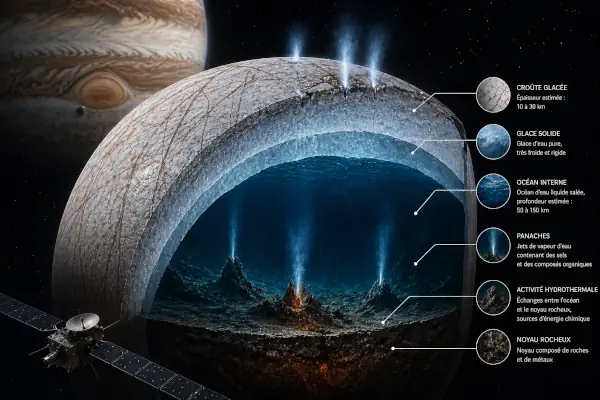
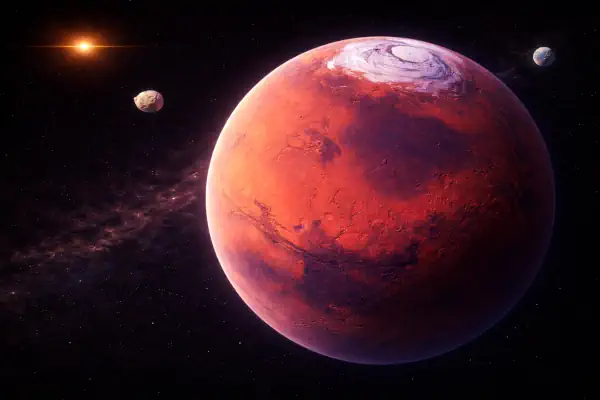
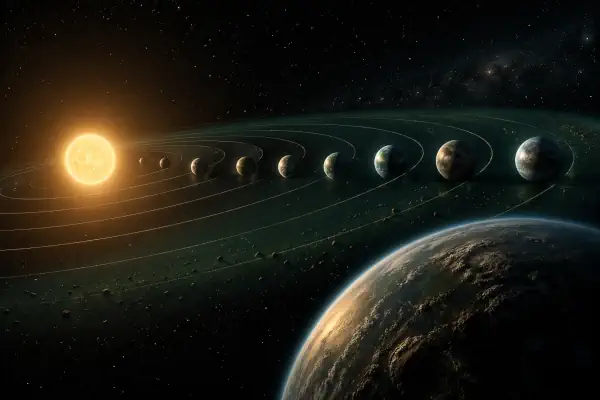
For a long time, the search for life focused on our immediate neighborhood: Mars, the icy moons of Jupiter and Saturn, or hidden ocean worlds buried beneath thick ice. Exoplanets opened an entirely different scale. They showed us that planetary architectures are far more diverse than the Solar System alone had led us to imagine.
This revolution is conceptual as much as observational. It forces us to accept that there is probably an immense variety of intermediate worlds: rocky planets, super-Earths, ocean worlds, tidally locked planets, systems around calm stars or active stars, thick atmospheres and tenuous atmospheres. If life exists elsewhere, it may not require a setting that looks strictly Earth-like.
Exoplanets became central because they shifted the question itself. We are no longer asking only whether life may have appeared in a few niches within the Solar System. We are asking which planetary and stellar combinations across the wider Universe can create environments that remain habitable over very long timescales.
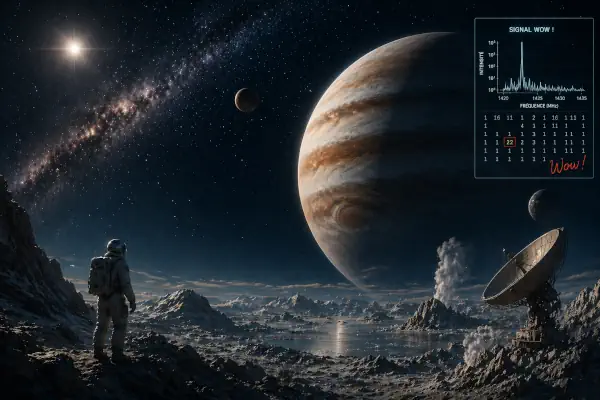
The habitable zone is useful, but it is not enough
The habitable zone remains an important guide. Broadly speaking, it refers to the region around a star where liquid water could, in theory, exist on a planet’s surface, assuming the atmosphere is suitable. It is a valuable filter for sorting targets, but it is not a final verdict.
A planet in that zone can still be biologically disappointing. It may suffer from an extreme greenhouse effect, have lost its atmosphere, be battered by violent stellar activity or lack any meaningful long-term climate stability. Conversely, some worlds slightly outside that zone may remain interesting if their atmospheres or internal structures partly compensate for the difference.
The habitable zone should therefore be understood as an initial map, not a complete answer. It tells us where it makes sense to look first, but it does not yet tell us whether a given planet truly offers conditions favorable to life.
Atmosphere, water and stability: the real criteria behind a promising world
What makes an exoplanet genuinely compelling is the coherence among several parameters. A sufficiently stable atmosphere can protect a surface, redistribute heat and support complex chemistry. Water, if it exists in liquid form somewhere in the system, provides an especially meaningful framework for the search for life. And orbital or climatic stability allows those conditions to persist.
Stability is often underestimated. Life does not depend only on a favorable moment. It depends on duration. A world that swings violently, loses its atmosphere too quickly or endures intense radiation on a constant basis becomes far less convincing, even if some initial indicators looked promising.
That is why researchers study complete systems rather than isolated parameters. A potentially habitable planet is, above all, a world where several elements line up: plausible temperatures, a detectable atmosphere, non-trivial chemistry, a coherent energy balance and a history stable enough to give complex processes a genuine chance.
Red dwarf stars: practical targets, but not automatic paradises
Many of the most observable exoplanets orbit small, faint stars, often red dwarfs. From an instrumental point of view, these systems are highly attractive: their planets are easier to detect and, in some cases, better suited to atmospheric study.
But that observational advantage should not make us forget the physical difficulties. A planet close to a red dwarf may be exposed to intense stellar activity, frequent flares, energetic radiation or tidal locking that drastically alters heat circulation. These worlds remain fascinating, but they should not be romanticized.
In reality, red dwarfs perfectly illustrate the complexity of the problem. They provide many targets, but they force us to distinguish between a world that is merely easy to detect and one that is truly favorable to long-term habitability.
Why these systems are both attractive and challenging
- they are often easier to detect and characterize
- they can make atmospheric studies feasible sooner
- they may also endure highly restrictive stellar activity
- they show that a good observational target is not always a good biological target
Biosignatures: what scientists hope to find, and why caution matters
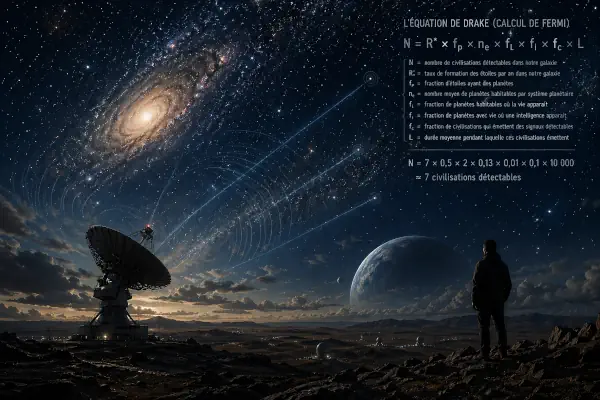
The word biosignature captures the imagination, but it demands real rigor. A biosignature is a chemical, physical or atmospheric clue that could be consistent with biological activity. In practice, that means scientists are not simply looking for a pleasant planet. They are looking for signals that suggest an imbalance difficult to explain without life.
The problem is that an isolated signal can mislead us. An atmosphere rich in certain gases, a specific composition or a spectral anomaly may be produced by purely geological, photochemical or stellar processes. That is the trap of false positives.
A serious detection strategy therefore requires a global reading of the system. Researchers need to cross-check clues, understand the type of star involved, estimate the radiation history, place atmospheric composition in context and verify whether multiple signals truly converge toward a biological interpretation. The more extraordinary the signal, the higher the standard of proof must be.
Which worlds should we prioritize in the search for life?
Not every detected world has the same scientific value. The best targets are not always the most famous ones, but the ones that offer the strongest compromise between observational accessibility and physical coherence. A rocky planet with a usable atmosphere, a regular orbit and a relatively understandable stellar environment is already a more valuable target than a spectacular object that is nearly impossible to interpret.
Ocean worlds are also of great interest to researchers. They broaden the discussion beyond the strictly Earth-like model. A planet covered in water is not automatically ideal, but it invites us to rethink habitability in more flexible terms. In that context, a stable atmosphere and chemically meaningful gradients become especially important.
Finally, planets that differ somewhat from Earth can still be extremely important. Searching for life does not mean searching for a perfect clone. It means identifying environments where the major functions required for life — water, energy, chemistry and stability — can plausibly coexist.
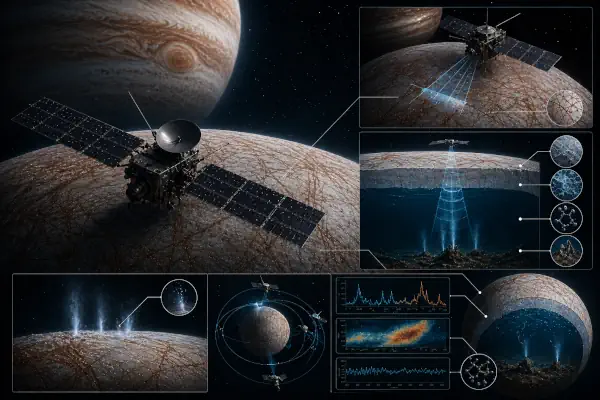
Earth remains a reference point, not the only model worth copying
It is tempting to search for a perfect second Earth. But that approach has limits. Earth is our only known example of a living planet, which makes it both invaluable and potentially misleading. It helps us frame hypotheses, yet it cannot define the full diversity of worlds that might be habitable.
Some planets may be wetter, more oceanic, cloudier, denser or exposed to different kinds of starlight. Others may offer localized, transient or non-Earthlike habitable environments. Reducing life to a single Earth-style setting would risk making us overlook credible configurations that are less intuitive but still scientifically meaningful.
The best strategy is therefore to stay guided by the broad principles of life as we know it, without locking astrobiology into overly strict mimicry. The goal is not to find an exact duplicate of our planet, but to understand which planetary architectures can sustain long-lasting chemical complexity.
Comparing major scenarios helps us avoid quick illusions
To understand where life is most worth searching for, it helps to compare several plausible situations without slipping into sensationalism.
A quick comparison of the most credible scenarios
- Planet in the habitable zone but with an unstable atmosphere: an interesting target, but difficult to view as durably habitable
- Rocky world with a detectable atmosphere and a relatively calm star: one of the most promising profiles
- Ocean world with rich chemistry but difficult interpretation: a fascinating and potentially habitable scenario, though harder to read
- Intriguing atmospheric signal with strong ambiguity: a common case where scientific caution must outweigh excitement
This comparison shows that the serious search for life depends less on slogans than on carefully ranking targets. The best worlds are not always the ones that inspire the fastest dreams, but the ones that offer the strongest scientific readability.
Why exoplanets may transform our view of life in the Universe
Research on habitable exoplanets is not just about building a catalog of distant worlds. It profoundly changes how we think about life’s place in the cosmos. If favorable environments turn out to be common, then life may be less exceptional than we once believed. If truly coherent worlds prove rare, that would also tell us something essential about how fragile biological conditions may be.
In either case, the stakes go well beyond astronomical curiosity. Understanding where to search for life means asking how common chemically complex worlds may be, how diverse planetary histories can become and where Earth fits within a cosmos far richer than expected.
Habitable exoplanets therefore act as a scientific mirror. By studying them, we are not simply looking outward at distant worlds. We are also refining our understanding of what truly makes a planet living, or capable of becoming so.
Three related reads to continue exploring life beyond Earth
Habitable exoplanets make the most sense when placed within a wider reflection on extraterrestrial life, ocean worlds and other promising environments across the cosmos.
So, where should we really search for life on exoplanets?
The most serious answer, in 2026, is that we should look where several conditions converge: a planet that is not too extreme, a usable atmosphere, enough stability, active chemistry and a stellar context we can understand with reasonable confidence. None of those conditions is sufficient on its own. It is their combination that creates a truly credible target.
That requires a certain intellectual discipline. We have to resist shortcuts, premature announcements and “miracle worlds” declared habitable on the basis of a single indicator. Astrobiology moves more cautiously than the popular imagination, but that caution is precisely what will make future discoveries more reliable.
Habitable exoplanets are not just a fascinating topic in modern astronomy. They represent one of the great intellectual thresholds of our time: understanding whether life can emerge elsewhere, under other skies, within other planetary balances, and whether the Universe contains more living stories than the one we know here.
FAQ
Is a planet in the habitable zone automatically habitable?
No. The habitable zone only suggests that temperatures compatible with liquid water at the surface may be possible. Scientists must also account for the atmosphere, the star’s activity, climate stability and the chemistry of the system.
Why is the atmosphere so important in the search for life?
Because it influences temperature, may protect the surface, redistributes energy and can contain valuable chemical clues. Without a durable or interpretable atmosphere, evaluating a planet becomes much more difficult.
What is a biosignature on an exoplanet?
It is a signal that may be consistent with biological activity, for example in the composition of an atmosphere. But a potential biosignature must always be interpreted in context to avoid false positives.
Why do red dwarf stars come up so often in this topic?
Because they host many planets that are easier to detect and sometimes easier to study. But they also raise issues related to radiation, stellar activity and long-term stability, which is why caution remains essential.
Do we really need to search for a second Earth?
Not necessarily. Earth remains our best reference point, but other kinds of worlds could still offer conditions compatible with long-term habitability without looking exactly like our planet.