The apparent twin of our planet
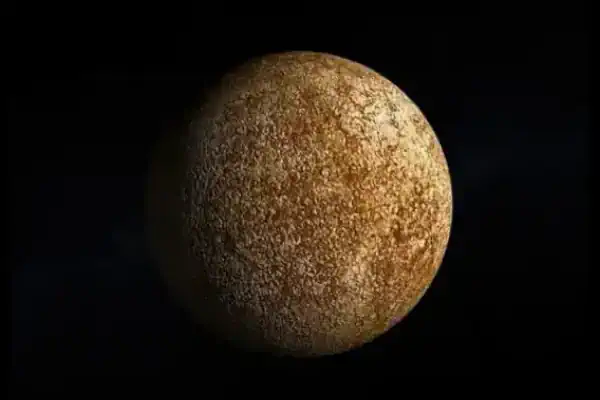
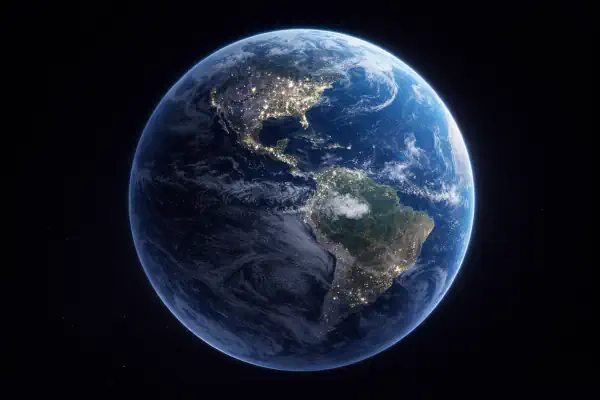
Venus fascinates first because in several essential ways it resembles Earth. Its size is close, its mass is comparable, its nature is rocky, and its location in the Solar System places it in a neighboring zone to our own. For a long time, these similarities fed the idea that it might be a kind of planetary sister world, perhaps covered in oceans, soft clouds, or even simple forms of life.
That hypothesis was never absurd. Viewed from the broad scale of the Solar System, Venus seems to belong to the same planetary family as Earth. Yet it is precisely the contrast between initial resemblance and final divergence that makes Venus such a powerful scientific object. Two nearby worlds, almost twins in their starting structure, can arrive at radically different destinies.
What Venus shares with Earth
- a very similar overall size
- a mass comparable to Earth’s
- the structure of a rocky planet
- a relatively nearby position in the inner Solar System
But behind these similarities lies a decisive rupture. Venus is not Earth with a few differences. It is the demonstration that a nearly similar world can become unrecognizable when its atmospheric and climatic balances collapse.
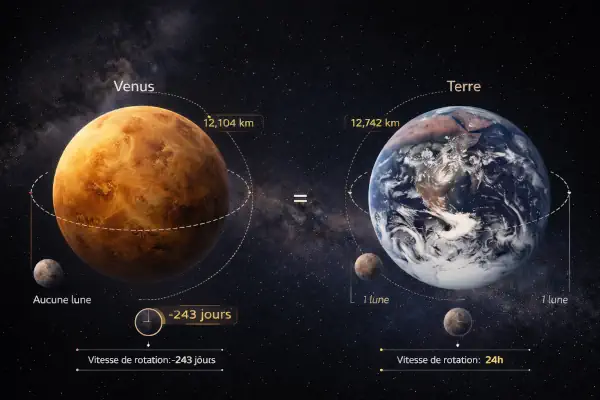
Venus fascinates scientists because it resembles Earth closely enough to raise a troubling question: how could an almost sister planet become a hellish world?
The runaway greenhouse effect: when a planet tips into excess
The key to Venus lies in its atmosphere. It is composed overwhelmingly of carbon dioxide, at such a level that the greenhouse effect reaches an extreme intensity. Heat is trapped there permanently, and the planet has become a stable furnace, with no genuine thermal release comparable to what Earth’s atmosphere still allows.
The numbers reveal the scale of the phenomenon. The average surface temperature reaches around 465 °C, enough to melt certain metals. Atmospheric pressure is about 90 times greater than Earth’s at sea level. The clouds, far from being benign, contain sulfuric acid. Beneath that envelope, the surface of Venus is not merely hot: it is crushing, corrosive, and extraordinarily difficult to access.
Venus has therefore become one of the best known examples of planetary-scale climatic runaway. It is not a simplistic model for Earth, but it does offer a fundamental reminder: the habitability of a world depends on delicate balances, and proximity to the Sun or the composition of an atmosphere can be enough to push an entire system into the extreme.
Seeing the invisible: the scientific challenge posed by Venus
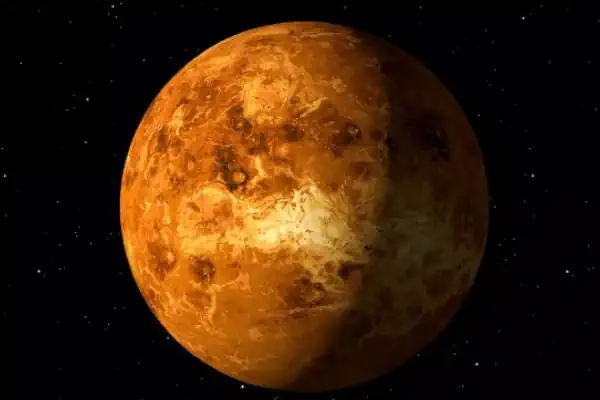
Studying Venus is difficult precisely because it hides behind its own atmospheric system. Its thick clouds strongly reflect visible light and completely mask the surface from conventional optical instruments. For a long time, that opacity sustained uncertainty, speculation, and conflicting hypotheses about what lay beneath.
To pierce that secret, scientists had to rely on other methods. Orbital radar made it possible to map the relief despite the clouds. Infrared spectroscopy helped analyze atmospheric composition. Probes attempted, often for only a few minutes, to survive the heat and pressure of the surface. Every technological advance tore away a fragment of the veil that still protects this planet.
How researchers study Venus
- orbital radar to read the terrain hidden beneath the clouds
- infrared spectroscopy to analyze the atmosphere
- chemical and mineralogical composition measurements
- probes capable of briefly surviving at the surface
Thanks to these approaches, we have discovered volcanic plains, vast geological structures, and landscapes shaped by a long thermal history. Yet every answer opens onto further questions: is geological activity on Venus still present? Did it once possess liquid water in a distant past? Did its climate tip gradually or violently?
The cosmic mirror of Earth
Venus matters to science because it is more than a spectacular planet: it acts as a mirror. Not a simple mirror that would directly reflect our future, but a conceptual mirror that forces us to think carefully about the conditions of habitability. Why did Earth preserve oceans, stable cycles, and an atmosphere compatible with life, while Venus followed a path toward extremity?
This comparison does not feed astronomical curiosity alone. It also nourishes a broader reflection on planetary climates, atmospheric stability, critical thresholds, and long-term transformation mechanisms. To study Venus is to better understand what a habitable planet is, but also what a planet looks like after it has left that zone of equilibrium.
That is why Venus is not merely a bright neighbor in Earth’s sky. It is a major case study for modern planetary science. It reminds us that between two worlds almost alike at the beginning, physical history can produce radically opposite realities.
An invitation to scientific curiosity
Venus fascinates because it resists. It hides beneath its clouds, it quickly destroys the probes that attempt to touch it, and it continues to raise questions that science has not fully resolved. That resistance is not a secondary obstacle; it is part of its deeper interest. The great scientific planets are often those that do not surrender their truth easily.
In that sense, Venus perfectly embodies what is most alive in research: a tension between what we believe we understand and what still escapes us. Every mission, every radar measurement, every climate model applied to its atmosphere transforms our understanding of it, but never exhausts it entirely.
That is also what explains the editorial power of this planet. Venus is at once accessible to human sight, immediately identifiable in the sky, and scientifically vertiginous the moment one approaches its reality. It combines apparent beauty, physical violence, and theoretical depth. Few worlds bring together so many contrasts.
The Morning and Evening Star is therefore not merely a luminous object in our sky. It is one of the great open planetary questions still before us.