The first human technologies
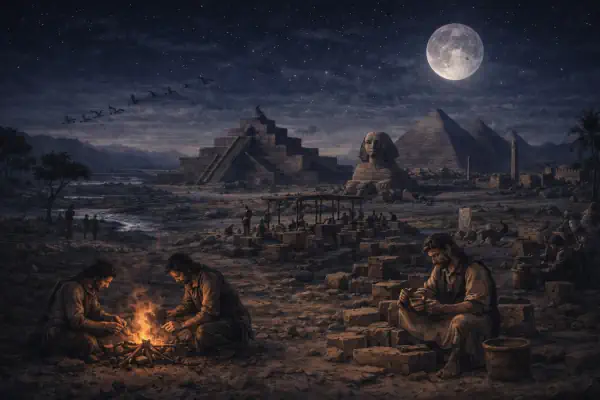
Technological history begins long before writing, industry, or computing. It starts when early hominins shape tools capable of extending their gestures, transforming their surroundings, and improving their chances of survival. A chipped stone, a primitive blade, or the mastery of fire are not simple material milestones: they are the earliest great cognitive and technical breaks in the human story.
At this stage, technology is not yet distinct from everyday life. It is directly tied to food, protection, social organization, and the transmission of knowledge. It already represents a way of augmenting humanity, not through complex machines, but through intelligence applied to matter.
This origin reminds us of one essential idea: every great technological revolution begins as a new way of solving a fundamental problem.
The evolution of technology tells not so much the story of accumulating machines as the progressive expansion of human capacities: to act, produce, anticipate, calculate, communicate, and reshape reality on ever wider scales.
Renaissance, machines, and industrial revolutions
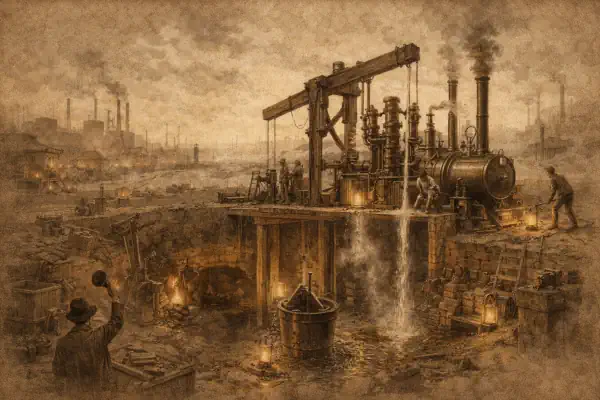
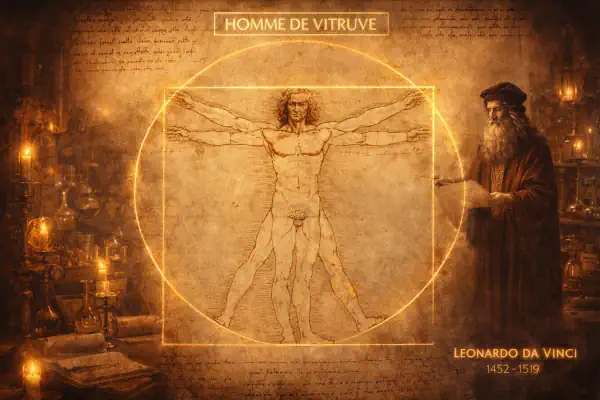
Between the Renaissance and the industrial revolutions, technical progress changes in nature. It is no longer only a matter of improving isolated tools, but of structuring knowledge, formalizing methods, and industrializing production. Printing, mechanics, navigation, early modern engineering, and the expansion of applied science open an entirely new phase in human history.
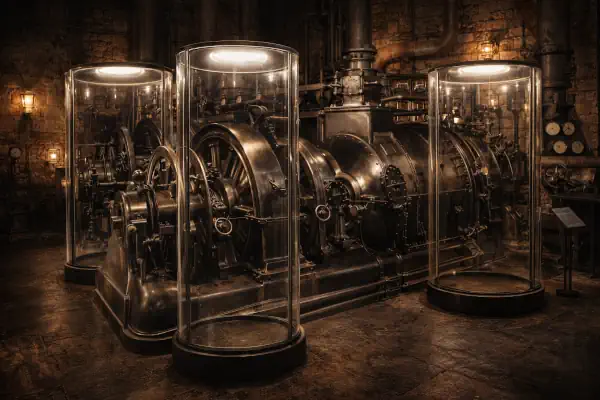
The First Industrial Revolution introduces the steam engine, mechanized textiles, railways, and a new relationship between energy, production, and transport. The second accelerates the process even further with electricity, engines, chemistry, modern communications, and the rise of scientific medicine.
What these ruptures changed permanently
- they massively increased productive capacity
- they transformed the scale at which people, goods, and ideas could circulate
- they established technology as a central engine of modern societies
The digital age and modern technologies
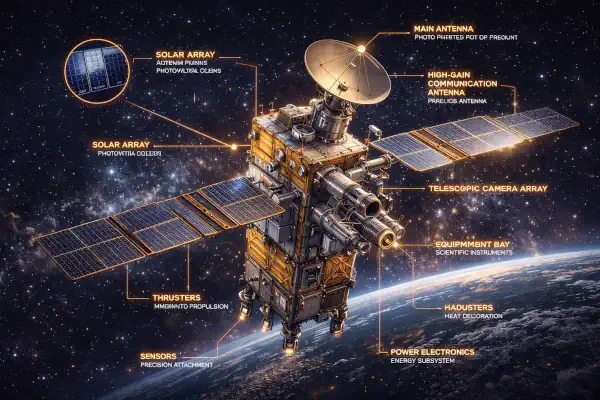
Since the mid-20th century, computing has transformed the very nature of technology. Progress no longer depends only on stronger physical machines, but also on systems capable of processing information, automating decisions, connecting networks, and handling ever-larger volumes of data.
Computers, then the Internet, semiconductors, software, mobile networks, and artificial intelligence form a new technical layer that simultaneously affects science, the economy, culture, health, and communication. This phase changes the rhythm of progress itself: innovation becomes faster, more diffuse, and more systemic.
Artificial intelligence today embodies one of the strongest expressions of this shift. It extends the logic of calculating machines by adding the ability to analyze, predict, generate, and sometimes act semi-autonomously within complex environments.
Toward future civilizations
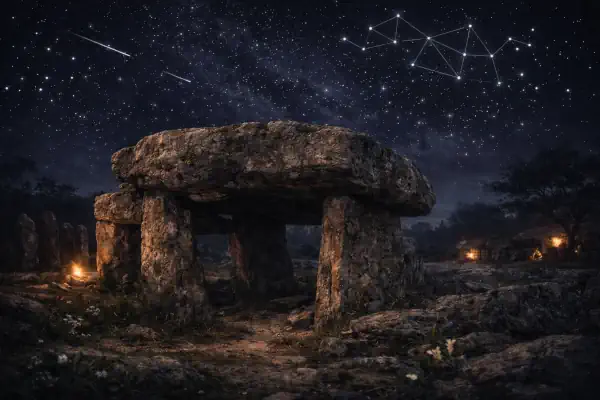
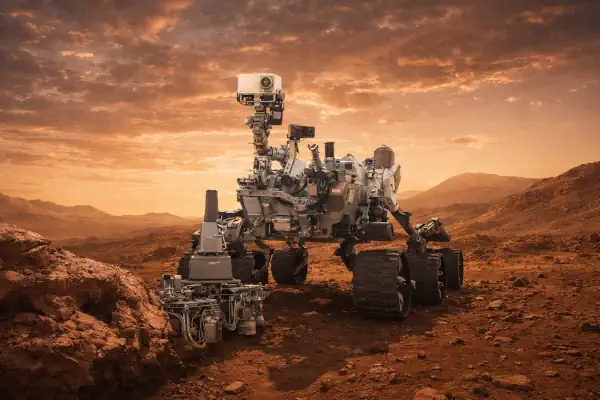
When the history of technology is viewed across the long term, one question emerges: how far can a civilization go as it gains greater mastery over energy, information, and matter? This question has inspired several theoretical models, including the Kardashev scale, which classifies civilizations according to their ability to harness energy on the scale of a planet, a star, or an entire galaxy.
Without falling into empty speculation, this idea offers a powerful way to reread human progress as a cumulative rise in technical capacity. From chipped stone to electronics, from the combustion engine to distributed computing, from the workshop to intelligent automation, each break widens humanity’s sphere of action.
The technological future is therefore not merely an accumulation of more sophisticated objects. It may represent a true civilizational change of scale, in which technology, energy, and collective organization redefine what a society is capable of becoming.